Sunday, February 27, 2011

Christmas Photography Tips and Advice


Cuba Gallery: Abstract / art / green / water / fork / macro / photography by ►CubaGallery


Photo Credit: celtics baby clothes


For Christmas photography tips, or any sort of photography, we want the best results to come from our time and effort. Christmas photography captures special moments, especially when children are involved. In fact, this leads to my first Christmas photography tip:

(1) Focus on the children first. This admittedly is a bias of mine, but Christmas foremost should be a children's holiday. This applies to gift-giving, and also to photography. If you disagree and/or if adults are at the center of your Christmas, fine, that's just my opinion. Just think of ol' Art Linkletter: "Kids Say the Funniest Things." Kids also make the best photo subjects, and regardless, Christmas (like Trix cereal) is for Kids.

Our Top Ten Christmas photography tips are going to relate to the strategy of taking the best photos, not to the type of camera. That's a whole 'nuther topic. In fact, yours truly is not even a shutterbug. My advice comes from working as a local daily newspaper reporter, among some of the best professional photographers, going back to the 1970s when they still used darkrooms, up to today in the digital age. These Christmas photography tips are geared toward how you interact with your subjects, once the camera is chosen and the lighting adjustments are made.

(2) Don't be one of these photographers who is constantly out front and interrupting things, asking people to pose. For your best Christmas photography, be the fly on the wall. Stay in the background and take candid photos of what's happening, photos in which the subjects don't realize you're taking their photos.

(3) A lower angle (shooting "upward" toward the subjects and the scene) often yields better results. Don't hesitate to sprawl on the floor.

(4) In your Christmas photography, look for sequences of events. A photo is just one moment in time and to capture a sequence, many folks nowadays prefer a video camera. Still, there's nothing like a series of photos. For example: (A) Child awaits anxiously for gift-giving to begin. (B) Child receives wrapped gift. ( C ) Child tears wrapping off of gift. (D) Child reacts to gift.

(5) In fact, your sequence of events could begin hours earlier. Child helps decorate tree. Child puts on Christmas outfit. Etc.

(6) Just because you're staying out of the spotlight with your camera, that doesn't mean you can't be persistent. Patience is a virtue in waiting for just the right moment, just the right shot.

(7) Be a minimalist. Don't try to illustrate the whole scene of the Christmas event at once. If it's a party, take turns focusing on individual participants, or no more than two or three in one frame. If your Christmas photography involves a group of carolers, go ahead and photograph the whole group, but also aim for closeups of one caroler, or a small group.

(8) If you still want some posed Christmas photography for the archives, that's fine. Try to do the posing at the conclusion of the shindig, not at the start or during the middle.

(9) For posed photos, try to keep the number of subjects small. Let's imagine the group of Christmas revelers is 20. Go ahead and shoot the group of 20, but keep in mind that with so many folks in there, their faces are going to be the sizes of dimes. Also shoot "subgroups" with three, four, five people.

(10) When people pose in groups, have them put their heads as close together as possible. This may seem like a minor point, but when you see the results, you'll understand. Faces can be 20 percent larger and up close if we eliminate the wasted space between their heads.

SOURCES

Personal experience

http://digital-photography-school.com/16-christmas-photography-tips

http://www.best-family-photography-tips.com/Christmas-pictures.html

http://photography.about.com/od/christmas/Christmas_Photography.htm

Tips for Breaking into Sports Photography


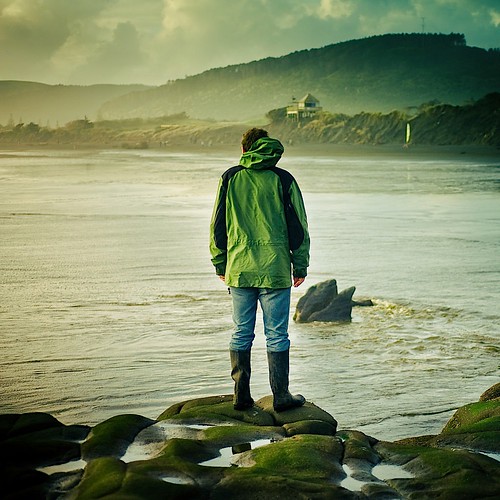
Cuba Gallery: New Zealand / portrait / green / ocean / landscape / sea / beach / man / photography by ►CubaGallery


photo source


Winthrop University, Rock Hill, SC, student photographer Chris Osborne hopes his experience in sports photography will take him to the next level - his goal for every shot is "Sports Illustrated Cover".

Osborne explains how a sixth sense is valuable in sports photography, but without the basics of photography, you will still miss the shot.

What first attracted you to photography? How did you get started yourself?

Photography was something I could do since I have always been able to see how I wanted things to look. I have started and restarted a few times. My first camera was a 110 mm back in 3rd grade. I moved onto other interests until college, where I got a Coolpix L3. It is good for general use, but trying to shoot basketball did not work at all. So, I purchased a Rebel XT and have not looked back.

What photographers - well known or unknown - inspire you?

Beyond the sports photography culture, two unknowns got me where I am today. The first is my sister. She says that I stole her interest in photography and will not hold back any criticism of my work. The second is Paul, a fellow photographer at the school paper. After seeing one of his pictures in the paper and not liking it at all, I decided that I could do a better job and filled the other sports photographer position. Only later did I learn that an editor and not Paul made the cropping decisions.

What equipment do you use? Is there a certain piece of gear you could not live without?

I am currently using a Canon Rebel XT with the kit 18-55mm lens, Canon 50mm 1.8, Canon 75-300 4-5.6, and a Tamron 28-200mm 4/5.6. My only other add ons are a Canon battery grip and a polarizing filter. Being on a college student budget, I do not buy new equipment unless I will really use it. But if I had to pick one item that I couldn't live without it would be the battery grip. I missed too many shots by flipping the camera the wrong way to shoot vertically or simply missing the shutter button.

Do you have any goals in mind with your photography?

For my sports shot, there is always one basic thought running through my mind - Sports Illustrated cover. I would love to have one someday. For everything else, I think about if I could see the shot hanging on someone's wall. If I cannot, I find something that fits that requirement.

What do you feel are your strengths and weaknesses in sports photography?

As much as I hate to say this one, one of my strengths is that I have a camera that can handle the speed and lighting at college sporting events. Beyond that, I am able to have a personal relationship with most of the athletes and am able to predict fairly well what is about to happen. My weaknesses are that I am still too slow at times to get the shot that I want, despite knowing almost exactly what is about to happen and that I have a tendency to tilt my camera. Also, where the Winthrop athletic department lets me go during games limits what I am able to shoot.

What does it take to be a quality sports photographer?

To be a quality sports photographer, you have to be a little bit psychic. By that I mean that you need to be able to know where to point the camera to get the shot. Some sports are easier than others. What sports do you like to shoot? I like to shoot basketball and volleyball most. They are high intensity and usually have something new to get every time. I like baseball the least because most of the shots are just excessively similar.

What post-processing tools/software do you use? How much does that influence your photography?

When I want better control over the photograph, I will use Photoshop 7 or Gimp depending on which operating system I am working under (desktop runs XP while laptop is in the process of switching over to Linux). I use Picasa for basic editing such as cropping and overall brightness/contrast. I sacrifice the overall control for speed when I have to turn things in to the school paper.

What advice would you give new photographers?

A) Don't get discouraged. Photography is an art, which means you will have to work at it.
B) A good photographer can overcome bad equipment, and good equipment will not make you a good photographer.
C) Less time editing your photographs means you'll have more time to take more, so get things right in camera as much as possible.
D) Try to see all of what there is to shoot, not just the stereotypical snapshots that everyone else will find.

Check out Osborne's photography at http://sapidexistence.com

Saturday, February 26, 2011

Shooting for Stock Photography


Cuba Gallery: Red / shoe / green / grass / landscape / photography / light by ►CubaGallery


credit,photo source


A great way to earn money and learn a lot in the internet is participating in stock photography. Stock photography has been around for a while. And there are a lot of great stock sites that sell photographs for a reasonable price.

Just how and what should you shoot to be able to participate in stock photography?

Photographers say you should start with the concept. But the very first thing you should do is to know your equipment. I literally spent ten times more time trying to know how my camera works than thinking of something to shoot.

Stock photography is a very demanding industry. It's as close as you'll get to professional photography. It requires you to be able to produce images of the highest quality. That is because this industry is very competitive.

Try shooting the same subject with different settings. You should know how your camera reacts with different kinds of light. You should also know how it responds to different levels of illumination. Note the differences you see and keep them in mind.

Next you need a concept. Your images should present an idea, a thought or an expression. Consider a photograph of a man typing on a computer. What is he doing? Why is he typing? Is he working? Is he Blogging? Or just playing?

Designers buy stock images because of the concept they present - not because they look good. Stock photos are used in web sites, brochures, magazines, publications, advertisements, and almost anything that has a print.

So you need to have an image that has a concept that satisfies the needs of the would-be buyers of your pictures.

Then, you need a lot of light. Stock photos require that images have the right level of illumination and contrast. They need to be clear. If you can't afford a big set-up, you can always use desk lamps or even the sun.

You'll also need a computer and two kinds of programs: noise reduction tool and a photo editing application. Most stock photographs go through a noise reduction process. They also get a little tweaking in color, contrast and brightness.

Stock photographs need to be as close to perfect as possible. It's like what they say in the computer graphics industry: "it does not matter how you do it as long as you get the job done." Don't think that editing a photo in your pc is cheating. That only goes for journalism.

The next is pretty simple. You need a stock agency to upload your images to. Or you can showcase your work in your own site. Uploading in stock agencies is better. That is because you can find out where and how to improve. Use their powerful community to find out your weakness and strengths as a photographer.

Then when you have all this, what you need to do next is to be consistent and improve and improve and improve. You need to keep up with the ever demanding industries. If you don't, you'll get left behind.


DIY Wedding Photography on a Budget


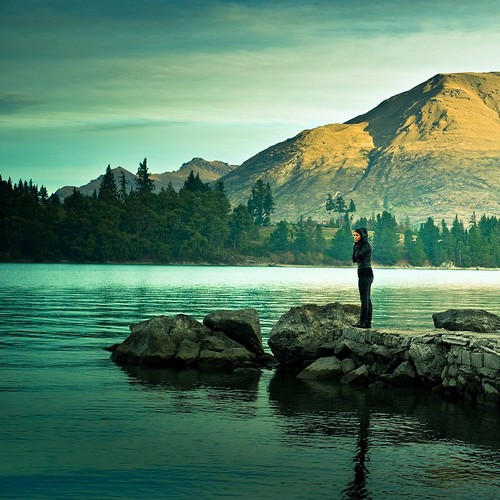
Cuba Gallery: New Zealand / green landscape / mountains / lake / portrait / beautiful / nature / rural / sky background / water / trees / hills / photography by ►CubaGallery


source


So, your wedding is fast approaching and you want memories that will last a lifetime. However, you are on a budget and don't have a lot of money to spend for a professional wedding photographer. You can still get professional-looking, creative, memorable pictures with DIY wedding photography.

The first thing to do is to find someone who takes great pictures. This doesn't have to do be a professional photographer. Many people have a "great eye" and instinctively know how to take great pictures. Think of friends or family members who you've complimented on their photography from vacations, for example. Another way to find a cheap wedding photographer is to look on local college bulletin boards, or post on them yourself in the art department or photography department. Many students have amazing talent, but since they are still a bit inexperienced, will be your wedding photographer for a fraction of the price of a professional wedding photographer. Some may even photograph your wedding for free, for no more than a free meal and use of your wedding pictures for their portfolio. You can also consider putting an ad on Craigslist for a hobbyist who is not a professional wedding photographer, but has an artistic eye and loves to take pictures. Get samples of work and negotiate a price you are both pleased with.

Whether you use a talented stranger or an artistically-inclined friend or family member as your wedding photographer, make sure they have a good camera. You may even consider purchasing a good quality, digital camera that you can give them as their "payment". If you need to purchase a camera for your DIY wedding photography, make sure you give it to the wedding photographer in plenty of time for them to learn the ins and outs of the camera, so they can adjust the settings. Digital cameras also allow for easy editing, so you or your DIY wedding photographer can edit your wedding pictures. Also, digital cameras have a large capacity to store many pictures, with a memory card they can hold hundreds of pictures, so you will have plenty of wedding photos to choose from to preserve your special day.

Another idea is to meet with your DIY wedding photographer to develop a plan of what you want photographed. Remember, since you will be saving a lot of money by not hiring a professional wedding photographer, you will have to do some of the work yourself. This includes providing the DIY wedding photographer with a list of what you want photographed. This may include photographs of the wedding rings, the wedding invitations, the bridal party, the groomsmen, the family of the bride, the family of the groom, the bride and groom's first kiss, the wedding service, etc. This will help you and your DIY wedding photographer be on the same page and know each other's expectations beforehand, so you get exactly what you want on your special day.

Also, encourage others to take pictures of your wedding. Some of the best wedding photography are those wonderfully candid moments caught by some of the guests. Some wedding couples choose to put disposable cameras on tables for guests to take photographs of, then ask that they leave the cameras when they leave the wedding reception. Some give the cameras out as wedding favors and ask that any great wedding photographs be sent to the married couple.

Lastly, consider the best of both worlds. You can hire a professional wedding photographer for a short period of time to take a few very specific pictures, then rely on your DIY photographer and wedding guests to take the rest of the photographs. This will eliminate a lot of cost for a professional wedding photographer. You can also opt to don your wedding attire a few days after the event and go to a studio to have a few professional pictures taken.

Remember, it doesn't take a professional photographer to take some amazing, creative, professional-looking wedding photography. Have a great day!